
Transform your fantasy novel from good to epic with this George R.R. Martin technique! ✍️⚔️
Tips On How To Use The Ancient Third Person Narrative Like A Pro

It is time for Writing Wednesday, where I share writing tips to improve your writing. Visit my "All Things Beloved" substack to get a full scoop. Today, our book of reference is A Song of Ice and Fire.
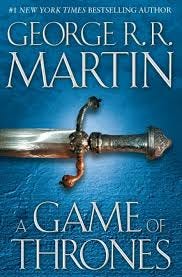
A Song of Ice and Fire, a monumental Epic Fantasy novel series of five books, A Game of Thrones, A Clash of Kings, A Storm of Swords, A Feast of Crows, and A Dance with the Dragons, has left an indelible mark on the Epic fantasy genre. Its journey from fantasy popularity to mainstream acclaim began with its first book in 1996, marking a significant shift in the genre’s landscape.
These immense successes make you wonder how George R.R. Martin (GRRM) crafted this masterpiece. GRRM made use of a simple narrative style amongst many other tools and techniques.
In character, in manners, in style, in all things, the supreme excellence is simplicity. — Henry Wadsworth
As writers, one of the crucial elements we need to consider is the narrative style of our story. Often, we overlook this aspect when plotting, believing we can adapt the story to any narrative technique. However, this can be a significant oversight.

We must recognize that some stories are best told in the omniscient narrate style. While some are best said in the overused first-person narrative. And because there are no set rules or principles concerning the choice of narrative style, we just pick one at a whim.
So, what exactly did GRR Martin do when he picked a narrative style for his most famous books? And how can we achieve it?
GRR Martin understood the complexity of his plot. ASOIF is a story with several main plots and numerous subplots. It is stories within stories. Martin made use of a third-person limited omniscient narrative style. With this narrative style, he was able to:
Lay out several scenes that seem disconnected initially but would later create that linear story movement.
Example: in the first book of the series- A Game Of Thrones. We begin the story through the limited view of Bran witnessing his Lord father (Ned Stark) beheading a white walker. The scene exposes the reader to the initial imminent danger -white walkers. It also reveals the family structure of the House Stark, which is evident in the way they share the wolf pups, and that is the first instance Jon Snow is mentioned. “Bran’s bastard brother Jon Snow moved closer.” In the following two chapters, we read from the narrative of 13-year-old Daenerys in Pentos, who is about to be sold by her brother Viserys. On the surface, these scenes appear to be disconnected. However, we know that due to the complexity of GRRM’s plot, he needed to establish the initial introduction and stakes early in the book to keep the readers going and the plot progressing. And not confuse them with too many subplots.
2. Next, he picked a narrative style that would make it easy for him to shift narratives. ASOIF was written in a third person limited narrative. A third person narrative is a disembodied voice in a book that walk audience through events. This narrative technique is exemplified with words like “he,” “she” and “they”. However, GRRM uses a third person limited narrative. A third person limited narrative is when the narrator has access to the thoughts and emotions of just one character. The narrator will follow a single character through the story and usually describe only events that the point of view character personally experience.
Isn’t this narrative limiting the entire book to a single character. No. GRRM shifts the narrative by writing from the eyes of different character for each chapter. With a third-person limited, it is easy to know exactly whom we are reading about. Each chapter starts from the third person POV of a character. The very first chapter is Bran next we have Catelyn, then Daenerys, etc.
Example:
ARYA
Arya’s Stitches were crooked again. She frowned down at them with dismay and glanced to where her sister Sansa sat among the other girls. Sansa’s needlework was exquisite. Everyone said so. . .
BRAN
For days, Bran could scarcely wait to be off. He was going to ride the Kingsroad on a a horse of his own, not a pony but a real horse. His father would be the Hand of the King . . .
When a reader picks up the book and starts from the Bran chapter, they know that everything happening here is from Bran’s eyes. It is a cheeky way of writing a first person POV in a third person limited style.

3. Martin picked a narrative style that helps you care more about the Character. Thereby creating that intimate connection that keeps you going. You are not just seeing the character through the lens of the character; you’re also seeing what other characters are saying or thinking about that same character.
An efficient example here is Jaime. When you meet him at the beginning of the book, it is through the eyes of the Starks. You see him as bad, arrogant, a King Slayer who pushed a kid out of a window. Then we get to visit Jaime’s POV, and we understand that King Robert would have killed Jaime and his entire family (legitimate or not) if he found out what Jaime did. We also learned from his point of view that he killed the Mad King because the Mad King was about to torch King’s Landing.
It is like we first understand the character through other characters. Then Martin brings the character forward to explain himself to the reader. That is pretty smart.
I just concluded reading K.J. Parker’s Ways to Defend a Walled City. And what an excellent book it is. K.J. Parker presented Orhan, a cynical, nihilistic, and relentlessly smart-mouthed genius character , in the best way possible. The story has a good balance of weight, stakes, and consequences. However, I feel this Historical Fantasy Novel would read better if written in the third person because the worldbuilding was rigid. Consider the initial introduction of the readers to the character’s world in the first few pages.
The imperial navy is always desperately short of skilled shipwrights. They let me join up, which meant citizenship, and I was a foreman at age twenty-two. Then the Echmen invaded, captured the city where I was stationed; I was one of the survivors and transferred to the Engineers … (Sixteen ways to Defend a walled city Page 5)
First-person can suck the readers in better, but for beginning writers, it is always hard to explain your world fully when you’re just restricted to a single character’s POV. Furthermore, a writer can lapse into exposition dumps (that leads to telling and not showing, like the example above) when writing the first person, especially if a character is ignorant or biased about their world.
Imagine reading The Lion, The Witch, and The Wardrobe. Suddenly, CS Lewis takes five pages to describe the sociopolitical impact of Santa Claus’s return and another ten pages to explain why some of the tress decided to side with the White witch.
In all, there is no specific formula. Just find what works best for you. It might be the first-person narrative or the third-person. Whichever you decide to use, make sure you're consistent with it. Jumping narrative styles is a complete turn-off.
Keep Writing!!
Bye